Consumerism is a huge problem in today’s society. Our throw-away attitude towards everyday goods and resources means that we have become accustomed to using and using without considering how much material and energy we are wasting. This problem extends far past pollution and the depletion of nonrenewable resources but can also be seen to have worsened other societal issues such obesity and economic inequality as we have become more and more used to consuming as much as we can rather than as much as we need [1].
Improving our behaviour will not only reduce the amount of resources that we are ploughing through but will also allow for more social improvements to be made as we can redirect our economic interest. For example, in 2006 it was estimated that $17 billion was spent on make-up globally whereas it was estimated that just $12 billion was required to provide reproductive healthcare for all women [2]. The idea of designing a new product to promote a more sustainable consumerism might sound like a contradiction however increasing numbers of designers are responding to this crisis and working towards changing society’s attitudes and behaviours through innovative design.
Make Do and Mend was a leaflet issued by the British Ministry of Information in the midst of the Second World War advising housewives on how they could be more thrifty with their wardrobe at a time when rationing forced the UK to be frugal. Amongst other advice, the pamphlet encouraged the use of pretty colourful patches to cover holes in worn down garments rather than needing to replace the entire item [3]. A modern equivalent to this now almost forgotten attitude has been brought about recently by FixIts, a London-based kickstarter set up by materials expert Chris Lefteri.
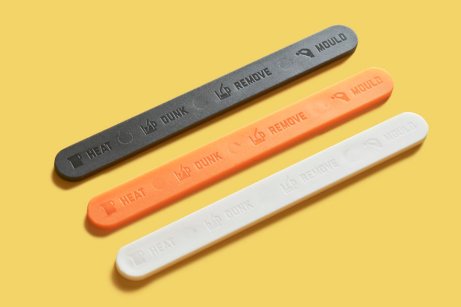
FixIts are biodegradable plastic sticks that can be softened in 60C water and moulded into the desired form by hand, this allows users to make repairs and create their own objects without the need to purchase and consume more in replacing objects or finding a commercial solution [4]. The process is super simple and is displayed directly on the product making it seemingly idiot-proof and could even be a great way to educate children about repairing and creating.
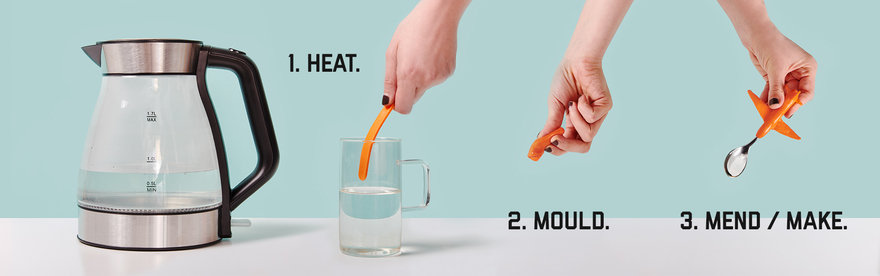


The process of design was a material first approach, Chris discovered the plastic while researching for his first book in 2000. Plastic has become a bit of a dirty word recently, our exponential use of single use plastics and inability to deal with the waste has caused the material to be incredible stigmatised, which is overall pretty positive. However, I think that FixIts use plastic in a very responsible way. Not only can the material repair objects of almost any material which will reduce the amount of material that the user will initially consume, but the material is biodegradable and reusable and therefore should not simply add to the pollution problem at the end of its long life.
The philosophy behind FixIts is to steer away from the guilt-trip approach to recycling but instead make recycling something that you want to do because it’s fun, not something you do because you feel like you should [5]. This, along with some great branding has resulted in a fun, appealing product that tackles a big problem.
I understand that consumerism isn’t going to end because of some small plastic sticks, however, I think that big issues such as these are tackled by awareness and changing attitudes. FixIts does this fantastically in a bright and cheerful way that makes you want to create and innovate rather than simply consume.
[1] https://greentumble.com/the-negative-effects-of-consumerism/
[2] https://newint.org/features/2006/11/01/facts
[3]http://www.bl.uk/learning/timeline/item106365.html
[4]https://www.core77.com/posts/78429/FixIts-is-a-new-household-emergency-fixer
[5] https://fix-its.co.uk/pages/about-fix-its
 Jess Vinnels' Design Blog