Liberty London is one of the most well known stores in the country, founded in 1875 it is sells a huge range of products but is most famous for its bright, printed fabric.
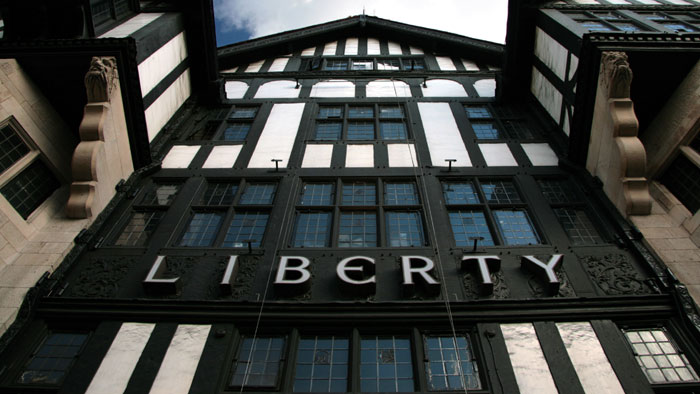
The founder, Arthur Liberty came from a background in textiles with an apprenticeship as a draper and a job in Farmer & Roger’s Great Shawl and Cloak Emporium. After 10 years of work Liberty decided to branch out and open his own business ‘East India House’ which sold oriental imports including rugs, ornaments and fabric. As the business and demand grew, Liberty decided to begin importing the undyed fabric which would then be hand printed in England in the style of the popular oriental designs. The products then became marketed as ‘Made in England’ marking the beginning of the store’s life as a quintessentially British brand.
In the 1920s Liberty began producing miniature floral, paisley and abstract prints that then became known as ‘Liberty Prints’. The prints continue to be a bestseller today and are available in cotton, silk and even PVC and corduroy.
Arthur Liberty once said “I was determined not to follow existing fashion but to create now ones,” I think this shows in how distinctive prints are, you immediately know if a fabric is a Liberty print. The merit of the design also can be shown from the designers that have used Liberty print in their work including; Jean Muir, Yves Saint Laurent and Mary Quant.
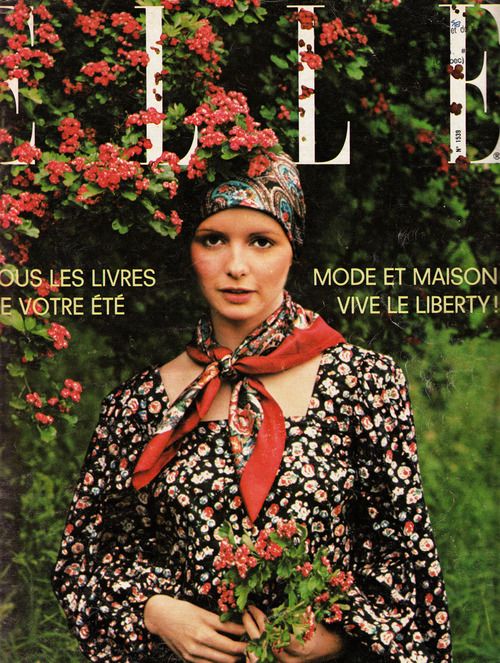
William Morris designed some of Liberty’s best known prints. At this point in time, art and fashion were very much linked. Women were encouraged to seek inspiration for new styles in Pre-Raphaelit and Aesthetic paintings which were also filled with references to Medieval Europe and Ancient Greece. Through the years there have also been links between Liberty and Art Nouveau, Bauhaus and Pop Art showing the adaptability of the design and its ability to ‘reinvent itself for each generation’.


Liberty ‘Bauhaus’ 1970s iconic drapery
As mentioned, originally artists and designers such as William Morris and Arthur Silver often created the unique prints. Today, the in-house studio conceptualises, re-works and hand-draw prints for the new seasons. Two archivists work in the studio and are constantly updating the archive with the new artwork, the archives can be searched to allow small parts of the designs to be used or to offer inspiration.
Each member of the design team brings different skills to the table and the variety of media lend themselves to be printed using different methods. For example, work created in gouache typically has very separate colours so tends to work well with rotary printing whereas watercolour inks tend to mix much more and therefore work much better as a digital prints.
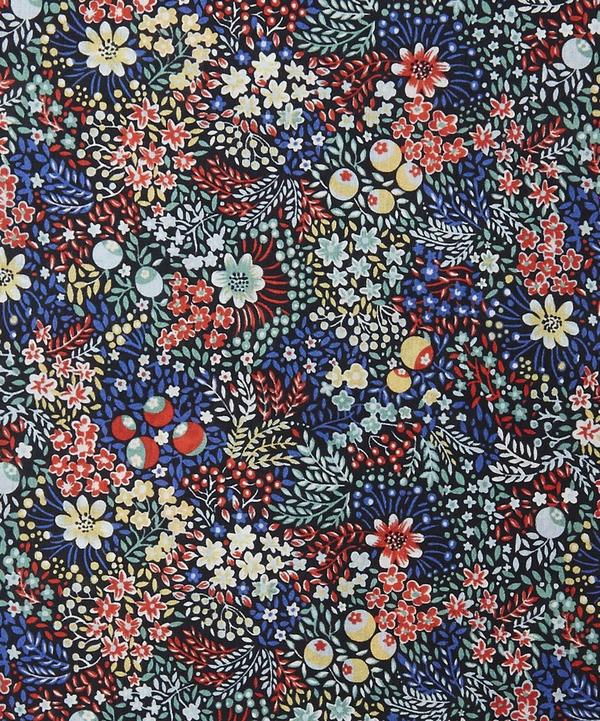
Above is one of my favourite prints from the most recent collection, Elderberry. I really like how it uses rich colours and intricate detail without looking dated. This is my favourite characteristic of the Liberty print range; the classic designs mean that they can constantly be updated and reworked without loosing their charm and heritage.
Sources:
https://www.joelandsonfabrics.com/uk/the-memo/liberty-prints-a-brief-history/
https://www.theguardian.com/artanddesign/2015/jun/03/liberty-prints-exhibition-fashion-textile-museum-flower-power
http://vintagefabrics.blogspot.com/2010/08/liberty-bauhaus-1970s-iconic-drapery.html
https://www.independent.co.uk/arts-entertainment/art/features/liberty-art-fabrics-fashion-doevcot-edinburgh-festival-williams-morris-anna-wintour-richard-quinn-a8464426.html
https://www.libertylondon.com/uk/features/design-and-living/liberty-design-studio.html
https://www.libertylondon.com/uk/elderberry-tana-lawn-cotton-R249515006.html?dwvar_000609702_color=30-BLUE&listsrc=Victory%20Vault%20Collection#start=1
 Jess Vinnels' Design Blog