On a recent holiday in Oslo I had the opportunity to attend a performance of Mozart’s Don Giovanni. While I’m not the biggest fan of opera, it was worth it to experience the opera house itself. Designed by Snøhetta, an international architecture and interior design office based in Oslo, the structure resembles a white iceberg sitting on the edge of Oslofjord.
The new opera house was the first step in the revitalisation strategy to redevelop the old industrial harbour and waterfront into active public space. It is build in piles into the fjord, reclaiming more waterfront space for public use. It has also made a big environmental impact to the site as before it was polluted with heavy metals leftover from when it was a dock and industrial harbour. Much of this pollution was removed during construction and the site is now rich with bird life, inhabitants are now also able to reconnect to the water’s edge.
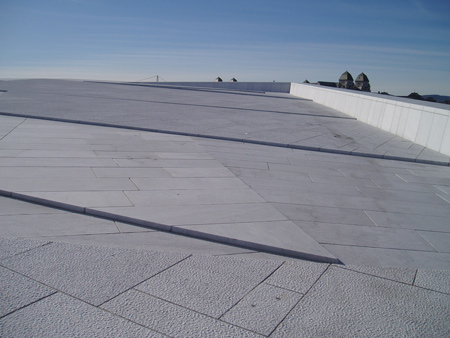
The most unusual thing about the building is the fact that the roof is accessible to the public, allowing pedestrians to walk over the entirety of the gently sloping structure. To me, this experience made me appreciate the building much more. Getting to view the structure itself and the surrounding landscape from so many angles also gave me a much better sense of place than is usual when looking at a building from street level. The human interaction that this simple design choice achieves makes the building both a social and sculptural monument.
Images from my trip to Oslo in June 2018.
Something that I really like about the space is the integration of other artist’s work to make structure where nearly every surface was curated for the project. Most notably is the marble roof of the building which was designed by Kristian Blystad, Kalle Grude and Jorunn Sannes which somehow creates a cloud made out of stone or the interior cladding designed by artist Olafur Eliasson that creates natural movement and change around internal structures . Snøhetta have always used artist collaborations as an integral part of their building projects bringing artists in as early as the competition stage. I think this results in an entity that works as a whole rather than artists just adding decoration.
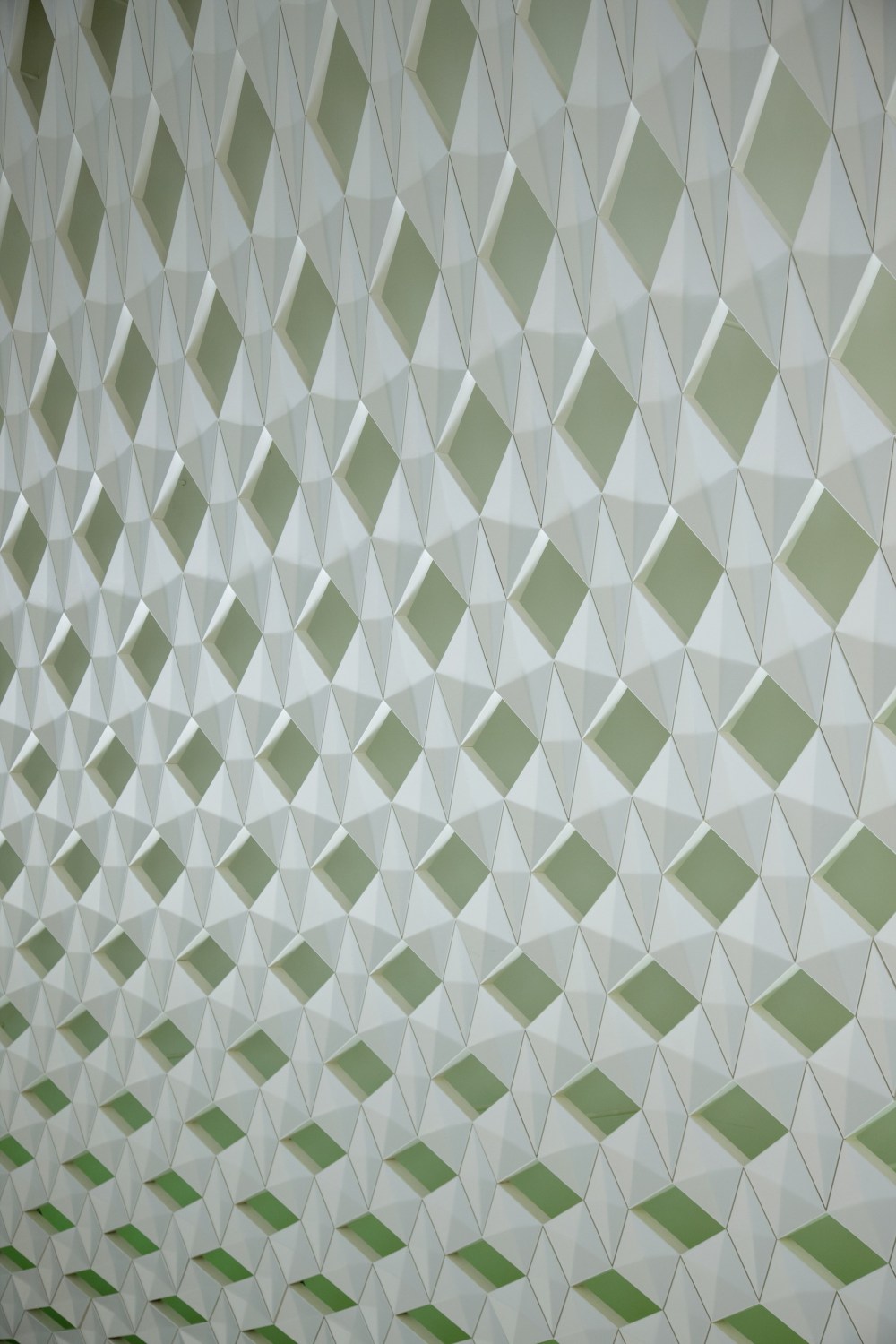
The interior of the building creates just as much of a sense of free movement and fluidity as the exterior of the building. The internal architecture cleverly undulates to provide natural pockets of seating from the structure itself. Other furniture is designed specifically to be informal, comfortable and modular so that over time, the space can adapt to its needs. I think this is so important in public buildings to create a warm and welcoming space. I also really like that this is contrary to some of the stereotypes that surround opera such as it being stuffy and old-fashioned.


Some features of the internal architecture
Overall, I am really pleased to have visited such an interesting building, I think it shows what all cities should be doing to revitalise their old, industrial areas. The project has created a huge amount of public space as well as the needed space for the opera company and it has done it in an incredibly well considered and interesting way. I think that the way the building links the city to the fjord reflects Norwegian ideals of spending time amongst nature while being an innovative, urban population.
Sources:
https://snohetta.com/project/42-norwegian-national-opera-and-ballet
 Jess Vinnels' Design Blog