Waugh Thistleton are a Shoreditch based architecture practice pioneering the construction of tall timber buildings. After researching the topic of building skyscrapers from wood I realised I have actually visited two of their projects. Firstly, I was able to visit one of their pieces of work at the London Design Festival where their 9m high pavilion was shown outside the V&A. MultiPly was like a big adult climbing frame and I think it was a great way to showcase their philosophy of building with wood.


Some photos I took of MultiPly when I visited the London Design Festival in Sept 2018.
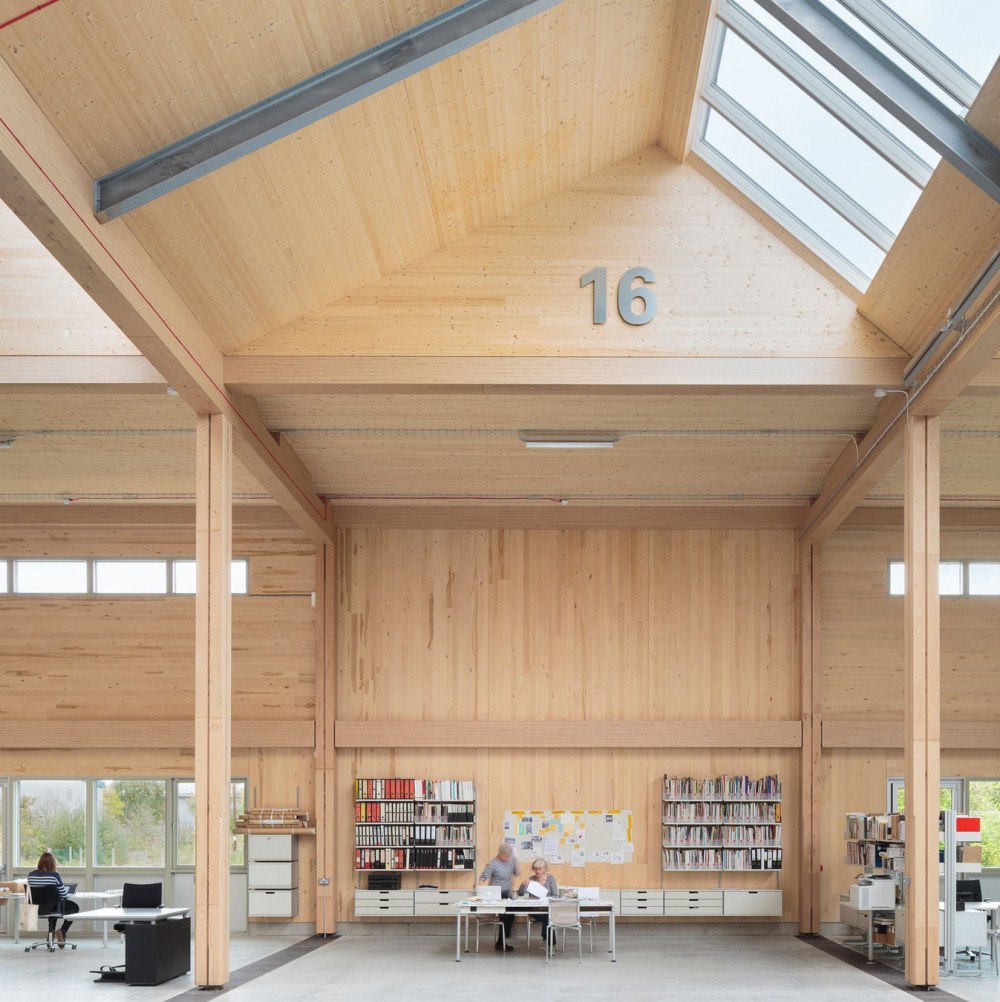
The new Vitsoe building is also one of their projects and I was really impressed with the philosophy around the building and how it brought all aspects of the company together under one roof, including manufacturing. I like how honest the interior of the building is with all of the structural timber on display. The natural warmth of the material also makes the large space seem much more cosy and approachable.
Concrete and steel both have huge carbon footprints, each contributes to 4% of global CO2 emissions annually. Is using wood as a mainstream building material again the answer? Andrew Waugh thinks so going so far to say that “we should be looking at concrete and steel like we look at petrol and diesel.”
The main attraction of using timber as a building material is the fact that it is much more sustainable than concrete and steel. Trees absorb CO2 and store it in their wood, this means that our building materials could combat the amount of CO2 being released globally. Timber is lighter than concrete and steel meaning that transportation costs in money and carbon are also reduced. The difference environmentally between these materials is so large that it is estimated that using wood to construct a skyscraper could reduce its carbon footprint by 75%.
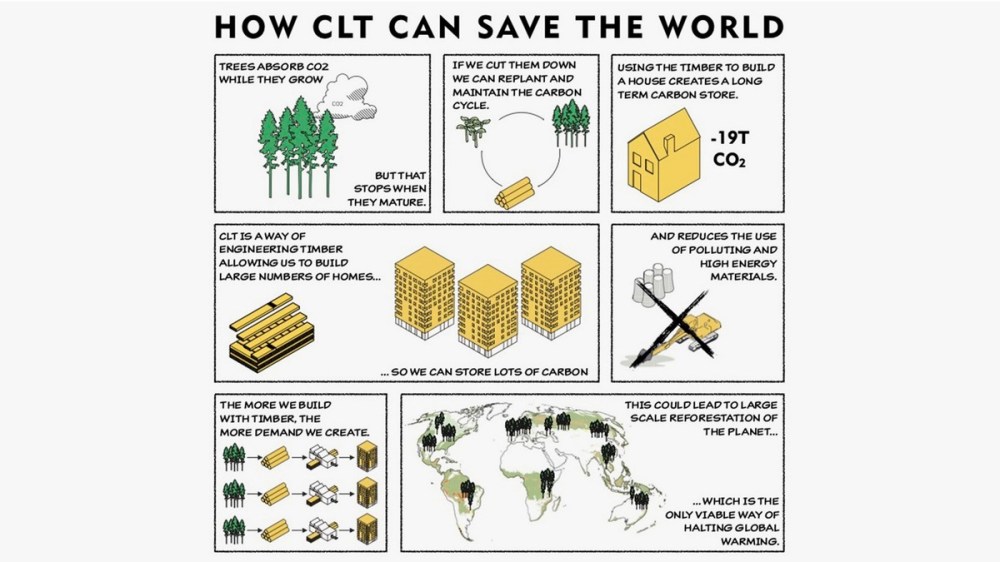
Another attractive part of building using timber is that, because panels of timber can be prefabricated and delivered to site, construction times are reduced by around a half. This also leads to financial savings. Wood is much more flexible than reinforced concrete meaning that in the event of an earthquake buildings sway instead of crumble. This is why most houses in New Zealand are built using timber.
The wood being used today to construct large buildings isn’t actually the timber that we have seen traditionally used in the past. Cross Laminated Timber (CLT) is a brand new material that is gaining a lot of traction and is sometimes describes as ‘superply’. It is made from huge layers of wood that are glued at 90 degrees to each other using a fire-retardant glue. This cross-lamination prevents warping and the result is much lighter than but of comparable strength to reinforced concrete.
An obvious worry about building with wood is its tendency to burn. History has shown that when cities are built using wood, fires spread very quickly and can be devastating. This history could be a key factor into reluctancy from investors. In fact, when CLT is subjected to a flame, the surface chars and some structural mass is lost. However, the char actually protects the wood beneath it from damage and due to the glue used in the material itself, the material self distinguishes. Wood actually can have much better performance under heat than steel and there have been cases of wooden roofs surviving where steel roofs have collapsed.
On the other hand, rot is also a worry when working with wood and rightly so, the material has great performance unless it is wet. This is managed by completely encapsulating the wooden structures externally with bricks, glass or other kinds of cladding to form a water-tight layer.
There are still some concerns with the material however, firstly the fact that a heavy building tends to mean a stable building and characteristically, wooden buildings are very light in comparison to their concrete equivalents. The problem with building tall wooden buildings is therefore how to hold them down. As you build taller, wind becomes heavier and lateral forces can be huge. This is one of the main barriers that developers working with wood are encountering. As well as this, the nature of the material CLT means that the panels of timber are huge and joining these together at this scale is a big problem since screws and nails are just not sufficient.
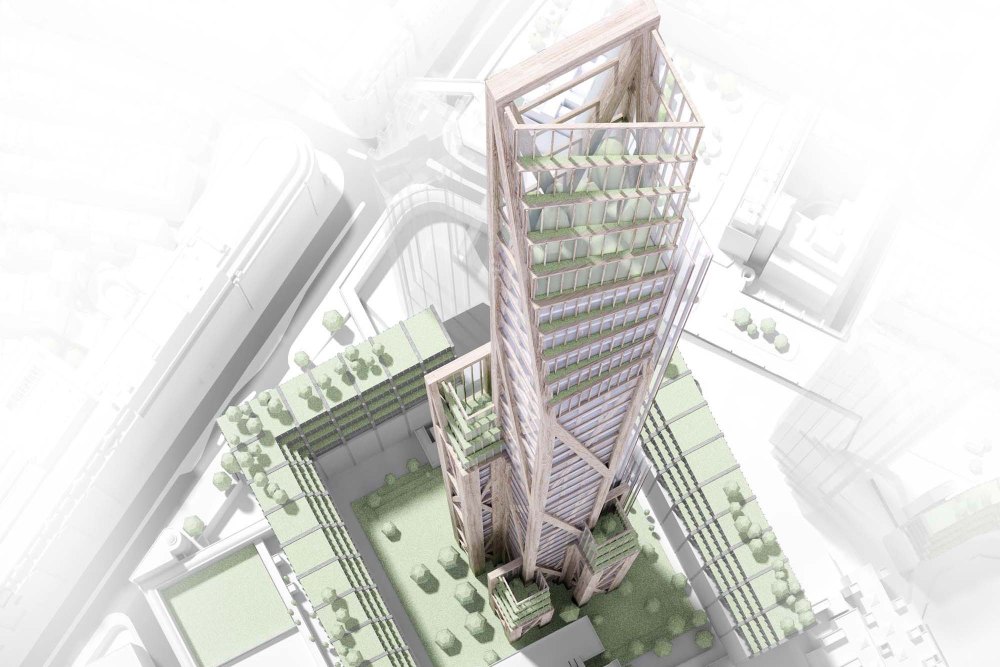
The reasons just mentioned explain why no one has yet built over 55m using CLT however there are many concepts and upcoming projects that have been designed which go much higher. Michael Ramage has worked with another London architecture studio to realise a concept skyscraper that would sit on top of the Barbican, famously made from concrete.
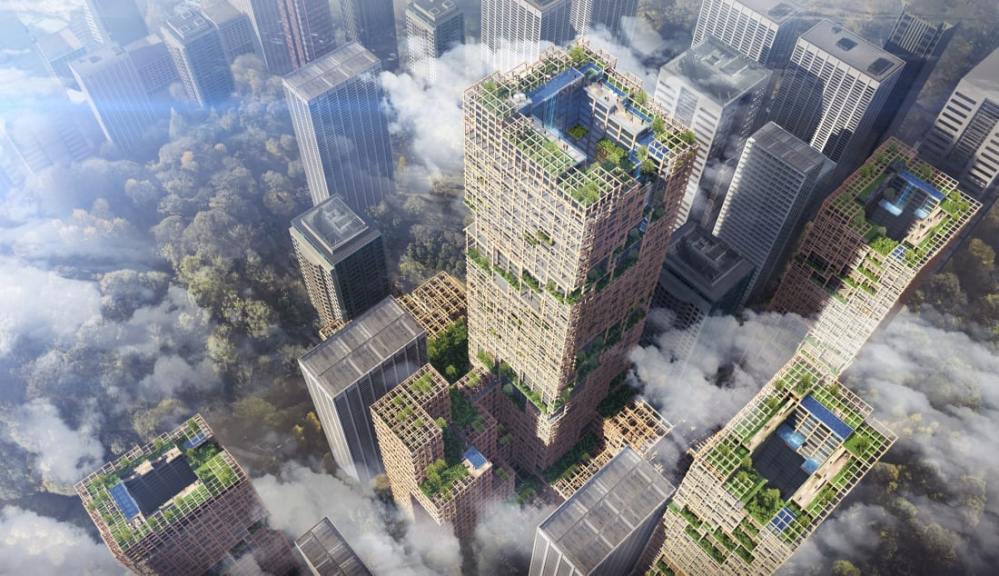
Tokyo is now also in plans to build the world’s tallest timber tower at 350m high meaning it will also be the tallest building in Japan when it is complete in 2041. The structure will be 90% wooden material however it will have a steel vibration control network due to the frequency and severity of earthquake in the region. The project is set to cost $5.6 billion to build however I think it will be great at raising awareness of the possibilities of the building material.
As you can see, there is a very promising future for building wooden buildings however it is clearly going to be a while until it is common to see ‘plyscrapers’ dotted around our cities. In the meantime I hope that we start to build more and more smaller buildings as the benefits of the material seem massive. I hope that investors see the potential in this building material and trust in architects like Waugh Thistleton so that we can reduce our carbon footprint as well as begin reforestation.
Sources:
http://waughthistleton.com/practice/
https://www.designingbuildings.co.uk/wiki/Can_Concrete_and_Steel_Ever_be_Carbon_Neutral%3
https://edition.cnn.com/style/article/wooden-skyscrapers-timber-trend-catching-fire-duplicate-2/index.html
 Jess Vinnels' Design Blog